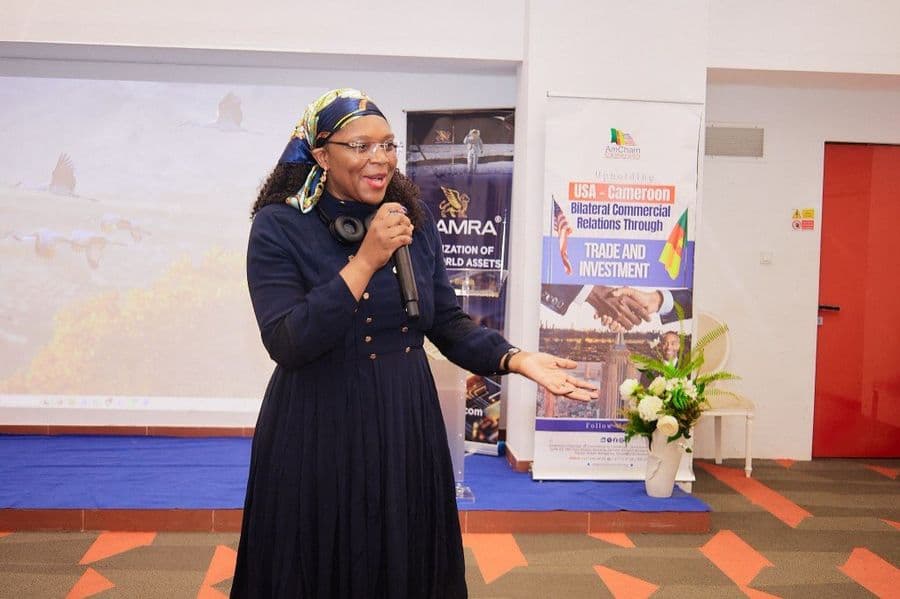
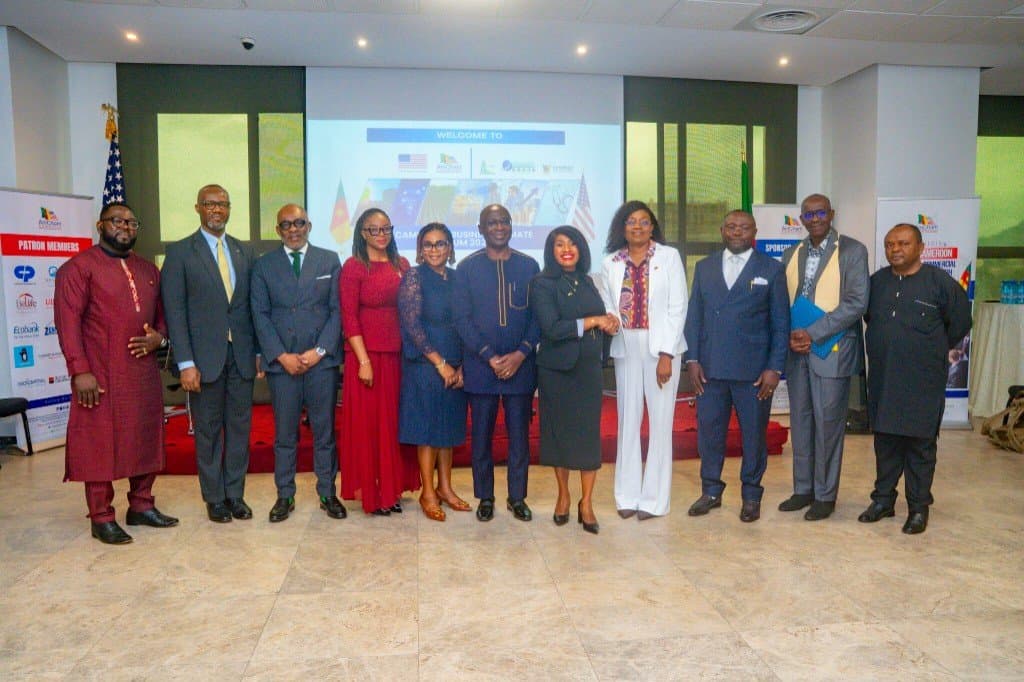
AmCham Cameroon and the U.S. Embassy brought together the private sector, regulators and government officials in Yaoundé for candid, solution-oriented discussions on banking, ICT, agroindustry, mining and health.
Yaoundé, August 26, 2026 — AmCham Cameroon and the U.S. Embassy convened a high-level forum with the private sector, regulators and government officials for candid, solution-oriented discussions.

Banking, Fintech & Foreign Exchange — Challenges in Capital Repatriation
The recent pre-funding regulation has redirected two-thirds of mobile money international transfers to informal channels. The imposition of a double 0.2% tax, a FCFA 100,000 loan cap for three months and the absence of a regulatory sandbox are hindering compliant fintech companies.
According to BEAC, the focus is on regulation rather than control, aiming to monitor transactions, safeguard reserves sufficient for 6.5 to 7 months of imports across six countries, and prevent blacklisting.
Information and Communication Technology — Capital Availability vs. Absorption Capacity
Cameroon boasts over 10 million Mobile Money accounts and a transaction volume exceeding $5 billion, yet fewer than 100 structured startups are available to absorb $100 million in investments. While Starlink is a secure and high-quality product, it employs only 15–20 staff compared to the thousands employed by Orange and MTN, and its licensing fee exceeds 800 billion FCFA. Fair pricing, guided by the Efficient Component Pricing Rule, is essential.
Agroindustry — The Two-Year Advantage
There is a deficit of over 200,000 tons of fish and 175,000 tons of meat annually, and nearly 90% of animal feed is imported. Opportunities include the establishment of fish farms and feed production facilities, offering a return on investment within two years. Investment Promotion Agency (IPA) incentives include a tax exemption for the first five years (0% duty, 0% internal tax), followed by five years of reduced tax benefits. Limited market access remains a significant bottleneck.
Mining Sector — Underutilized Potential
Despite the issuance of 200 licenses, production remains minimal. Even with 25 operational gold mines, tax revenue is low. Besides the 2023 Mining Code, newly released decrees led to a transition from a 10% dividend model to a production-sharing framework, with royalties ranging from 2% to 50%. As progress continues, SGS and the Ministry of Mines are collaborating to establish an in-country laboratory, enhancing local capabilities.
Health — $850 Million Partnership
In December 2025, a Memorandum of Understanding was established for a total of $850 million, with $450 million contributed by Cameroon. This initiative aims to harness the potential of U.S. pharmaceuticals, artificial intelligence and technology.
The United States, through its Embassy and the American Chamber of Commerce, is actively engaged in co-developing solutions. These efforts include creating a regulatory sandbox, ensuring transparent foreign exchange processes and establishing secure digital infrastructure.